
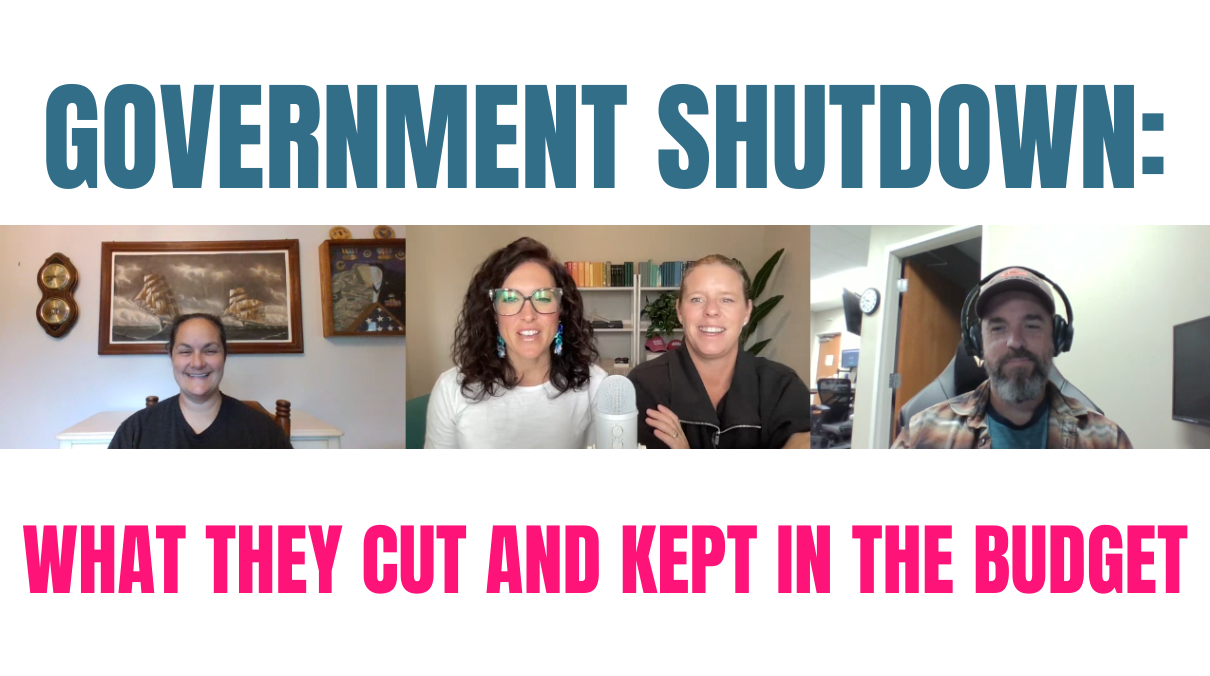
Our friends Sarah and Aaron joined us on the podcast to share how they are navigating the Government Shutdown. We are passing their tips along in case they help your family too.
Aaron is a government employee. He is working but not getting paid.
Sarah runs a horse riding and lessons business.
They have two girls in travel gymnastics.
When the shutdown hit, their home lost about 50 percent of income. Because they had been using our simple budget system all year, they were able to adjust quickly.
Here is what is working for them right now:
- Do a 5-minute weekly money huddle: list what drafts this week, check the bills-account balance, calculate the gap
- Transfer only the gap from savings to the bills account (one transfer for the week; they like round numbers like $500 when the math is close)
- Use the emergency fund, not credit cards; be your own bank now and plan to refill it with back pay first
- Pause non-essentials Sarah identified: subscriptions, vitamins, auto-orders, casual eating out
- Keep their non-negotiables: mortgage or rent, utilities, insurance, committed kids’ activities, transportation, and feed or boarding for the horses
- Temporarily stop auto-savings and other extra transfers; turn them back on when pay resumes
- Plan sports and travel realistically for the girls’ gymnastics: include fees, hotel, gas, food, parking; trim the extras and tell the girls the plan (for now they go to the meet and head home)
- Buy holiday gifts in cash only; Sarah grabbed a few Prime Day deals with cash, not cards
- Boost temporary income: Sarah is saying yes to extra lessons wherever she can
- Keep everything on one page so both can see it; their single-page spreadsheet shows every income stream and every bill so decisions are quick
- Track each transfer from savings so they know exactly what to pay back when checks arrive
- Talk openly about the plan; Aaron said the anxiety drops when they agree on the numbers and share clear expectations with the kids
Want help setting this up fast? Watch our Automate Your Budget class: https://budgetbesties.com/automate
Want our exact template? Grab the Simplified Budget System: https://budgetbesties.com/budget
Need hands-on help? Learn about private coaching: https://budgetbesties.com/coaching
What should I do first if a Government Shutdown pauses my pay?
List what drafts this week, check your bills account balance, and calculate the gap. Transfer only the gap from savings to the bills account. One move for the week.
Should I use credit cards during a shutdown?
If you have an emergency fund, use it first and plan to refill it with back pay. This keeps you cash only and avoids interest.
How does a weekly money huddle work?
Spend 5 minutes each week. List drafts and amounts, check the bills account balance, find the gap, and make a single transfer to cover the week.
What does “transfer only the gap” mean?
It means you move just the difference between this week’s drafts and the current bills account balance. Not a full paycheck amount. Just the gap.
What counts as non essential spending to pause?
Subscriptions, auto orders, casual eating out, and trip extras. Hit pause until pay resumes.
What stays in the budget during a shutdown?
Mortgage or rent, utilities, insurance, transportation, committed kids activities, and required animal feed or boarding.
How do I handle kids sports and travel costs right now?
Budget the full cost. Include fees, hotel, gas, food, and parking. Trim extras and tell the kids the plan so expectations are clear.
What if my paycheck is delayed but not fully stopped?
Use the same plan. Do the weekly money huddle, transfer only the gap, pause extras, and use your emergency fund. Refill it when the check lands.
How do I “be my own bank” in this situation?
Use your emergency fund instead of credit cards, track each transfer, and refill the fund first when back pay or delayed income arrives.
What should I restart first when pay resumes?
Refill the emergency fund to its target. Turn auto savings back on. Then bring back the extras you paused.